Inheriting a house that's in foreclosure: what heirs need to know
By Hannah Kaur · Updated 2026-08-01
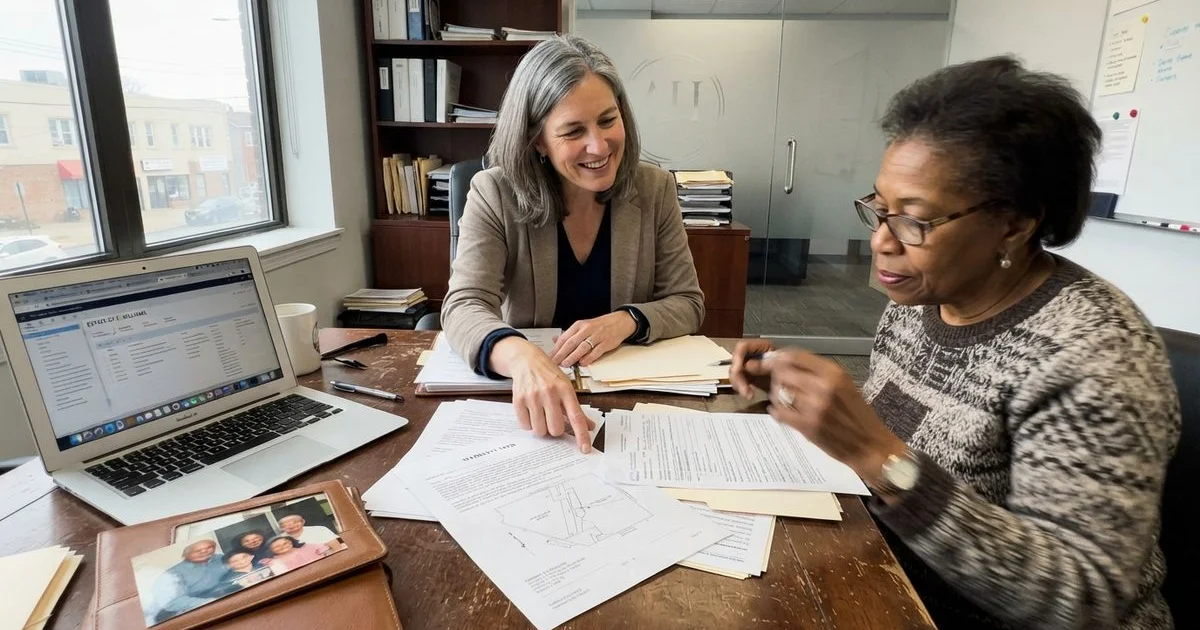
Losing a family member is hard enough without also discovering the home they left behind is already in foreclosure. This situation is more common than people expect, especially when an aging parent quietly fell behind on payments without telling anyone. Here is how the pieces fit together.
How families usually find out
It is common for adult children to have no idea a parent had fallen behind until a notice arrives after the death, sometimes months into a case that started while the parent was still alive and simply did not mention it. This delay matters because time already spent unaware is time the foreclosure case did not pause for, which is part of why moving quickly once you do find out matters so much.
You do not personally inherit the debt
An important starting point: inheriting a house does not mean you personally owe the mortgage the way the original borrower did. The debt is tied to the property itself. If the mortgage cannot be resolved, the practical consequence is losing the house to foreclosure, not a personal debt following you elsewhere, in most situations.
The foreclosure case does not pause itself
A common and costly assumption is that a court case will naturally wait while an estate is settled. It generally will not. Unless someone formally steps in, whether as an executor, administrator, or an heir asserting an interest in the property, the foreclosure case can continue on its own timeline while probate proceeds separately. That mismatch is where many families lose valuable time.
Options once you understand where things stand
| Option | When it fits |
|---|---|
| Assume the existing loan | You want to keep the home and can afford ongoing payments; check whether the loan type allows heir assumption |
| Sell the house before the sale date | The home has equity and there is enough time before a scheduled auction |
| Short sale or deed-in-lieu | The home is worth less than what is owed and you do not want to keep it |
| Let the process continue | The property is not worth saving and no heir wants to take it on |

Why timing matters more than usual here
Estate matters move on their own schedule, often slower than a foreclosure case does. If a sale date is already scheduled, the estate process itself will not stop it. Someone with legal standing, typically the appointed executor or administrator, generally needs to actively engage with the lender or the court, not just let probate run its course in the background.
When multiple heirs disagree
Not every family agrees on what to do with an inherited property that is underwater or behind on payments. One sibling may want to fight to keep it, another may want to walk away. Because a foreclosure case does not wait for family consensus, disagreement among heirs can itself become the reason a case advances further than it needed to. Family disagreement over a house is not unique to inheritance either; the guide on divorce and foreclosure covers how similar pressures play out when a couple is splitting up instead. Getting everyone talking to the same attorney or executor early, even informally, helps prevent the case from outrunning the family’s decision-making.
Getting the right person into the case
Lenders and courts generally need to see documentation establishing who has authority to act on the estate’s behalf before they will negotiate or accept payments from an heir. Sorting this out early, even informally with the lender, tends to prevent the case from advancing further than necessary while the family sorts out its plans.
This article explains general patterns in inherited-property foreclosure situations and is not legal or estate advice for your specific circumstances. Probate rules and mortgage assumption terms both affect what is actually possible in your case.
A single point of contact who has the legal authority to negotiate also tends to get taken more seriously by a lender than a group of relatives calling individually with conflicting information, which is one more practical reason to formalize who is speaking for the estate as early as possible.
An attorney who handles real estate and foreclosure law can help sort out the estate and mortgage pieces together. Our rubric page explains how listings on this site are evaluated, and you can start from the homepage to browse other practice areas.
FAQ
- Do I inherit the mortgage debt personally if I inherit the house?
- Generally no. You are not personally liable for a mortgage you did not sign just because you inherit the property, though the mortgage remains attached to the house itself and must be dealt with to keep it.
- Does a foreclosure case pause while an estate goes through probate?
- Not automatically. A foreclosure case can continue during probate unless someone takes specific legal steps, so inaction during probate can let the case move forward.
- Can I take over loan payments to stop the foreclosure?
- Often yes, especially for certain federally related mortgages where heirs have a right to assume the loan. The lender may require documentation proving your relationship to the deceased borrower and your interest in the property.
- What if the house has more debt than it is worth?
- You are generally not required to keep a property that is not worth saving. Heirs can decline to take on an underwater property, though the specific steps depend on the estate and state process.