Divorce and foreclosure: protecting your share of the home
By Hannah Kaur · Updated 2026-08-12
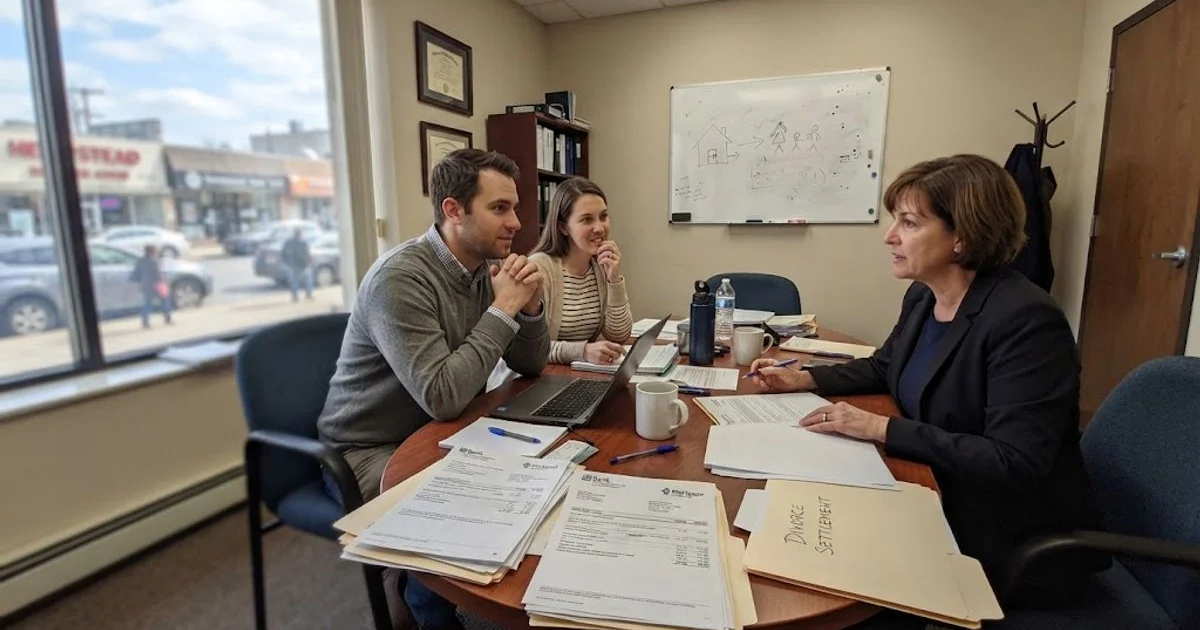
Divorce and mortgage default sometimes arrive at the same time, and neither process pauses for the other. If missed payments are piling up while a divorce is being sorted out, both spouses have more at stake, and less time, than it might feel like.
Why this catches people off guard
During a divorce, attention naturally goes to the more emotionally charged parts of the case, custody, support, dividing accounts, while a mortgage payment can quietly slip. Sometimes each spouse assumes the other has been keeping up with it, especially if one spouse moved out and the other stayed in the home. That assumption is exactly where a default can take hold unnoticed for months.
Two loan documents, two different processes
A mortgage is a contract with a lender, separate from whatever a divorce decree eventually says about who keeps the house or who is responsible for the debt. Both names on the original loan remain legally on the hook to the lender until there is a refinance or a formal release, regardless of what spouses agree to between themselves. A divorce agreement that says “spouse A will pay the mortgage” does not stop the lender from pursuing both spouses if spouse A does not follow through.
Foreclosure does not wait for the divorce to finish
Because a foreclosure case and a divorce case run on separate tracks, missed payments can trigger a foreclosure filing well before the divorce itself is resolved. This timing mismatch is one of the more common ways couples lose more equity than they expected, simply because nobody was actively managing the mortgage while attention was on the divorce proceedings.
What is actually at stake
| At risk | Why it matters in a divorce |
|---|---|
| Home equity | Lost in a foreclosure sale rather than divided as a marital asset |
| Both spouses’ credit | Missed payments affect both names on the loan, regardless of who was supposed to pay |
| Bargaining position | A pending foreclosure can pressure one spouse into a worse settlement to resolve it quickly |
| Timeline control | Foreclosure has its own deadlines that do not adjust for divorce proceedings |

Options worth discussing early
If keeping the home is the goal for one spouse, refinancing into that spouse’s name alone, ideally before default occurs, removes the other spouse from ongoing liability and clarifies ownership. If neither spouse wants or can afford to keep the home, selling it while there is still equity to divide is usually a better outcome for both than letting a foreclosure sale consume that value. If the mortgage is already delinquent, addressing that directly, through a modification or a coordinated payment plan, often needs to happen before the divorce settlement can meaningfully resolve who keeps what. A home’s ownership can get complicated in other family situations too, such as when it passes to an heir; see inheriting a house that’s in foreclosure for how that scenario differs.
When one spouse controls the information
If one spouse has been handling all financial matters and the other has limited visibility into the mortgage status, that imbalance can be used, intentionally or not, to the informed spouse’s advantage during settlement talks. Requesting a current mortgage statement directly from the servicer, rather than relying solely on what the other spouse reports, is a reasonable and often necessary step to confirm where things actually stand.
Coordinate, do not assume the other side has it handled
The most costly mistake in these situations is each spouse assuming the other is managing the mortgage. Confirm directly whether payments are current, and treat that as a separate, urgent question from the broader divorce negotiation.
Timing a refinance around the divorce process
Lenders generally require a finalized divorce decree, or at least clear documentation of the settlement terms, before processing a refinance that removes one spouse from a mortgage. That means the refinance conversation often cannot fully happen until the broader divorce settlement is farther along, which is one more reason to flag mortgage delinquency early rather than treating it as something to resolve only after everything else is settled.
This is general information, not legal advice about your specific mortgage or divorce proceeding. An attorney who handles real estate and foreclosure matters can help sort out the mortgage question, sometimes alongside your family law attorney. Our rubric page explains how listings on this site are evaluated, and you can browse other practice areas from the homepage.
FAQ
- If my ex stops paying the mortgage, does that only affect their credit?
- No. If both names are on the mortgage, missed payments affect both credit histories and both people remain legally responsible to the lender, regardless of what a divorce agreement says about who is supposed to pay.
- Does a divorce settlement automatically remove my name from the mortgage?
- No. A divorce decree can assign responsibility between the spouses, but it does not by itself change what the lender's original loan documents say. Getting off the loan generally requires a refinance or the lender's formal release.
- Can a foreclosure happen while a divorce is still pending?
- Yes. A foreclosure case runs on its own timeline separate from the divorce case, so missed payments during a divorce can lead to a foreclosure filing even before the divorce is finalized.
- What happens to home equity if the house is foreclosed on during a divorce?
- Equity that might otherwise have been divided between spouses is generally lost in a foreclosure sale, since the home is sold to satisfy the debt rather than sold on the open market for the couple's benefit.