What actually happens in a New York foreclosure court case, step by step
By Hannah Kaur · Updated 2026-07-14
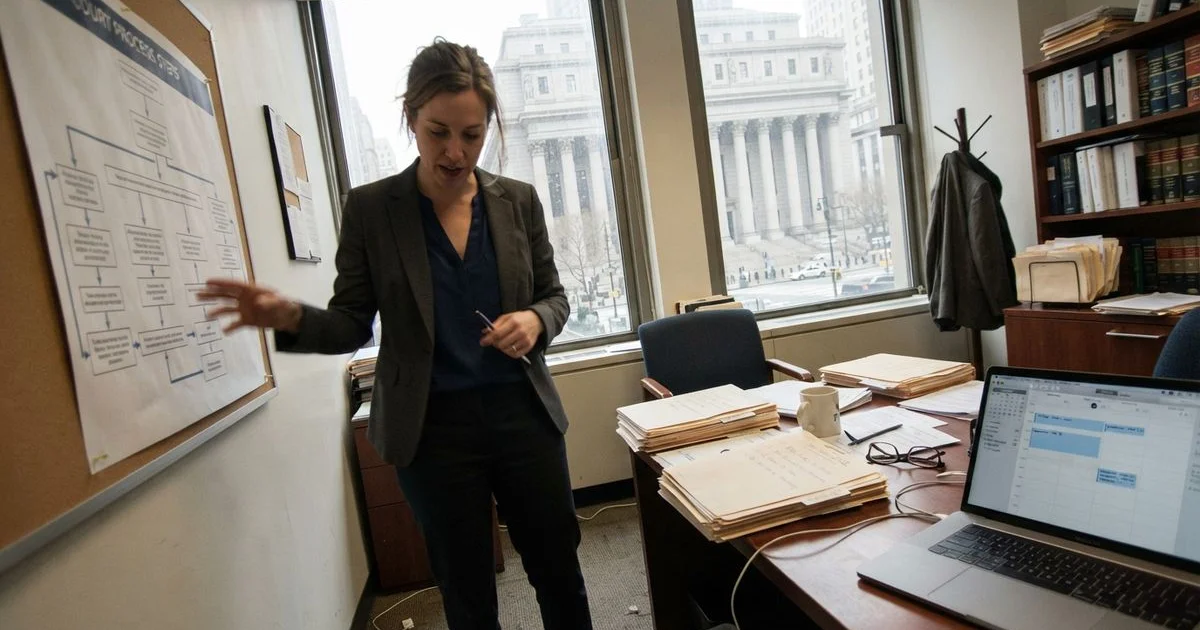
New York is a judicial foreclosure state, which means a lender cannot just take a house back. It has to sue the homeowner in court and win. That single fact shapes everything about how long the process takes and how much room a homeowner has to respond. If you are staring down a notice or a court filing, here is what the case actually looks like from start to finish.
Before the lawsuit even starts
New York law requires most residential lenders to send a pre-foreclosure notice at least 90 days before filing suit. This notice has to spell out the amount owed and list housing counseling resources. It is easy to miss in a stack of mail, but it is the first real warning sign that a case is coming.
During this window, the loan is usually already in default, and the servicer may be open to a repayment plan or loan modification. Once the 90 days pass without resolution, the lender can file. That notice period is also when specific homeowner protections kick in; the homeowner rights during foreclosure guide covers what lenders are required to do before and during a case.
Filing the lawsuit: summons and complaint
The case formally begins when the lender’s attorney files a summons and complaint and has them served on the homeowner. This is the point where “you might get foreclosed on” becomes “there is an open lawsuit with your name on it.” A notice of pending litigation is also usually filed against the property’s title, so it shows up in a title search.
You generally have a limited number of days to file a formal answer once served. Missing that window does not end the case, but it narrows your options quickly.
The mandatory settlement conference
For owner-occupied homes, New York requires a settlement conference before the case can move forward. This is a court-supervised session where the homeowner, the lender’s representative, and a court attorney or referee sit down to see if the case can be resolved without going further, often through a loan modification review.
Multiple conferences are common if the lender needs additional documents or if a modification application is pending. This stage can stretch on for months, which is frustrating, but it is also where many cases actually get resolved.
What a typical case timeline looks like

| Stage | What happens | Rough timing |
|---|---|---|
| Pre-foreclosure notice | Lender sends required 90-day notice | Before filing |
| Summons and complaint filed | Lawsuit begins, property served | Day 1 |
| Answer deadline | Homeowner’s window to respond | Weeks after service |
| Settlement conference(s) | Court-supervised negotiation | Months, often several rounds |
| Motion practice / litigation | Contested issues argued before a judge | Months to over a year |
| Judgment of foreclosure and sale | Court authorizes the sale | After judgment |
| Auction | Property sold to satisfy the debt | Weeks after judgment |
Every row can stretch depending on the county’s court calendar, whether the lender’s documentation holds up, and whether the case is contested.
Where cases go off this track
Not every case reaches a sale. Some are dismissed because the lender cannot prove it has standing to sue or missed a filing deadline. Others resolve through a loan modification, a negotiated payoff, or a sale of the home before a judgment is entered. A contested case, where the homeowner raises defenses and requires the lender to prove its claims, tends to run longer than an uncontested one.
What to do while the case is open
The most useful thing a homeowner can do early is show up: respond to the summons, attend every settlement conference, and keep records of every document sent to the servicer. Cases often stall or get worse not because the homeowner had no defense, but because deadlines were missed by default.
This article is general information about how New York foreclosure litigation works and is not legal advice for your specific case. An attorney can review your notices, your loan documents, and your county’s calendar to tell you where you actually stand.
If you want to see attorneys who handle these cases locally, the foreclosure defense litigation category is a good starting point, and our rubric explains how those listings are scored. You can also start from the homepage to browse by practice area.
FAQ
- How long does a foreclosure case take in New York?
- Judicial foreclosure in New York commonly runs well over a year from the first missed payment to a sale, sometimes longer if the case is contested or the court calendar is backed up. There is no fixed timeline; it depends on your county, how the lender's paperwork holds up, and whether you respond.
- Do I have to go to court if I am behind on my mortgage?
- Not immediately. A lender has to send required notices and then file a lawsuit before a judge gets involved. But once a summons and complaint arrive, the case is in court and deadlines start running.
- What happens if I do not respond to the lawsuit at all?
- The lender can typically move for a default judgment, which lets the case proceed toward a sale without your side being heard. Responding, even briefly, keeps your options open.
- Can a foreclosure case in New York end without a sale?
- Yes. Cases resolve through loan modification, a negotiated payoff, a short sale, or dismissal for procedural reasons, among other outcomes. A sale is one possible ending, not the only one.