What Chapter 13 bankruptcy costs when you're trying to save your home
By Hannah Kaur · Updated 2026-08-05
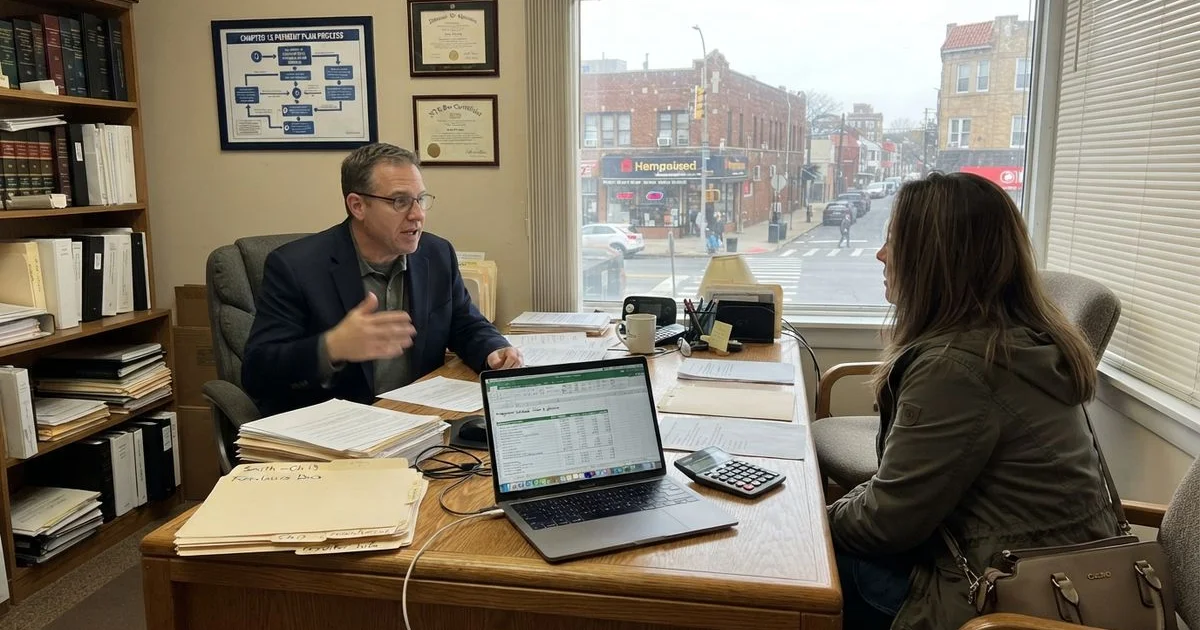
Chapter 13 bankruptcy is one of the more powerful tools available to stop a foreclosure sale, because filing triggers an automatic stay that generally halts the case immediately. But it is its own legal process with its own costs, layered on top of, not instead of, dealing with the mortgage default. Understanding what those costs actually cover makes it much easier to decide whether the tool fits your situation.
Why Chapter 13, specifically, and not Chapter 7
Chapter 7 bankruptcy can temporarily pause a foreclosure through its own automatic stay, but it is built around liquidating and discharging unsecured debt, not restructuring a mortgage default. Chapter 13 is built for exactly this situation: it lets a homeowner keep the house while catching up on missed payments through a court-approved repayment plan spread over several years. That is the main reason homeowners trying to save a home lean toward Chapter 13 rather than Chapter 7, even though Chapter 7 sometimes has a lower up-front cost.
The pieces that make up the total cost
Three things typically combine into what a Chapter 13 filing costs: the federal court filing fee, your attorney’s fee for preparing and managing the case, and the repayment plan itself, which is not a cost paid to anyone but a required plan for catching up on missed mortgage payments and other debts over time.
The federal filing fee is fixed at $338 regardless of who you hire. Attorney fees vary based on how complicated your finances are: a straightforward case with one mortgage and a few other debts costs meaningfully less in attorney time than a case with multiple liens, tax debt, or a prior bankruptcy filing.
What drives attorney fees up
| Factor | Effect on cost |
|---|---|
| Debt complexity (multiple liens, tax debt, prior filings) | Increases attorney time and total fee |
| How close the sale date is | Urgent, last-minute filings can require more compressed, intensive work |
| Creditor objections during the case | Contested issues add hearings and attorney time |
| Whether the case is combined with active foreclosure litigation | Coordinating two legal tracks adds complexity |
Automatic stay vs actually keeping the house
It helps to separate two different things. The automatic stay stops the sale and buys time; it does not by itself resolve the debt. Keeping the house long-term requires successfully completing a repayment plan that catches up the missed mortgage payments, typically over three to five years, while staying current on new payments as they come due.

Comparing the cost to the alternative
Weighing bankruptcy costs in isolation misses the point somewhat. The relevant comparison is usually bankruptcy costs versus what is lost if the home is sold at auction, including any equity built up over the years. For homeowners with meaningful equity or a strong desire to stay in the home, the combined filing fee and attorney cost is often modest relative to what is at stake. This is a different calculation than deciding whether to fight the underlying foreclosure lawsuit in court, which the guide on what a foreclosure defense attorney costs in New York breaks down separately.
A required credit counseling course, and other add-ons
Beyond the filing fee and attorney costs, federal law requires a credit counseling course before filing and a debtor education course before the case can be completed, each with a modest fee attached, usually paid to an approved provider rather than the court or your attorney. These are small relative to attorney fees but easy to forget when budgeting for the total cost of the process.
Paying the attorney fee itself
Many bankruptcy attorneys allow at least part of their fee to be paid over time, sometimes even folded into the repayment plan itself rather than paid entirely upfront, which matters given that anyone filing Chapter 13 is by definition dealing with financial strain. Ask specifically how the fee is structured before assuming it all has to be paid before filing.
This is general information about Chapter 13 costs and is not legal or financial advice. Whether Chapter 13 is the right tool, and what it will actually cost, depends on your specific debts, your income, and your timeline.
Attorneys handling these cases are listed under our bankruptcy category, and our rubric page explains how those listings are evaluated. You can also start from the homepage to browse other practice areas.
FAQ
- Does filing Chapter 13 immediately stop a foreclosure sale?
- Filing triggers an automatic stay, a federal court order that generally halts foreclosure proceedings right away. It is one of the more immediate legal tools available, though it works within the bankruptcy process, not as a standalone fix.
- What is the federal filing fee for Chapter 13?
- As of recent filings, the federal court filing fee is $338, separate from whatever your attorney charges for handling the case.
- Do I keep paying my mortgage during a Chapter 13 case?
- Generally yes, ongoing payments continue, plus a portion of the missed, past-due amount gets folded into your court-approved repayment plan over several years.
- What makes Chapter 13 attorney fees higher in some cases than others?
- Complexity is the main driver, more debts, multiple liens, prior bankruptcy filings, or contested issues from creditors all tend to add attorney time and therefore cost.